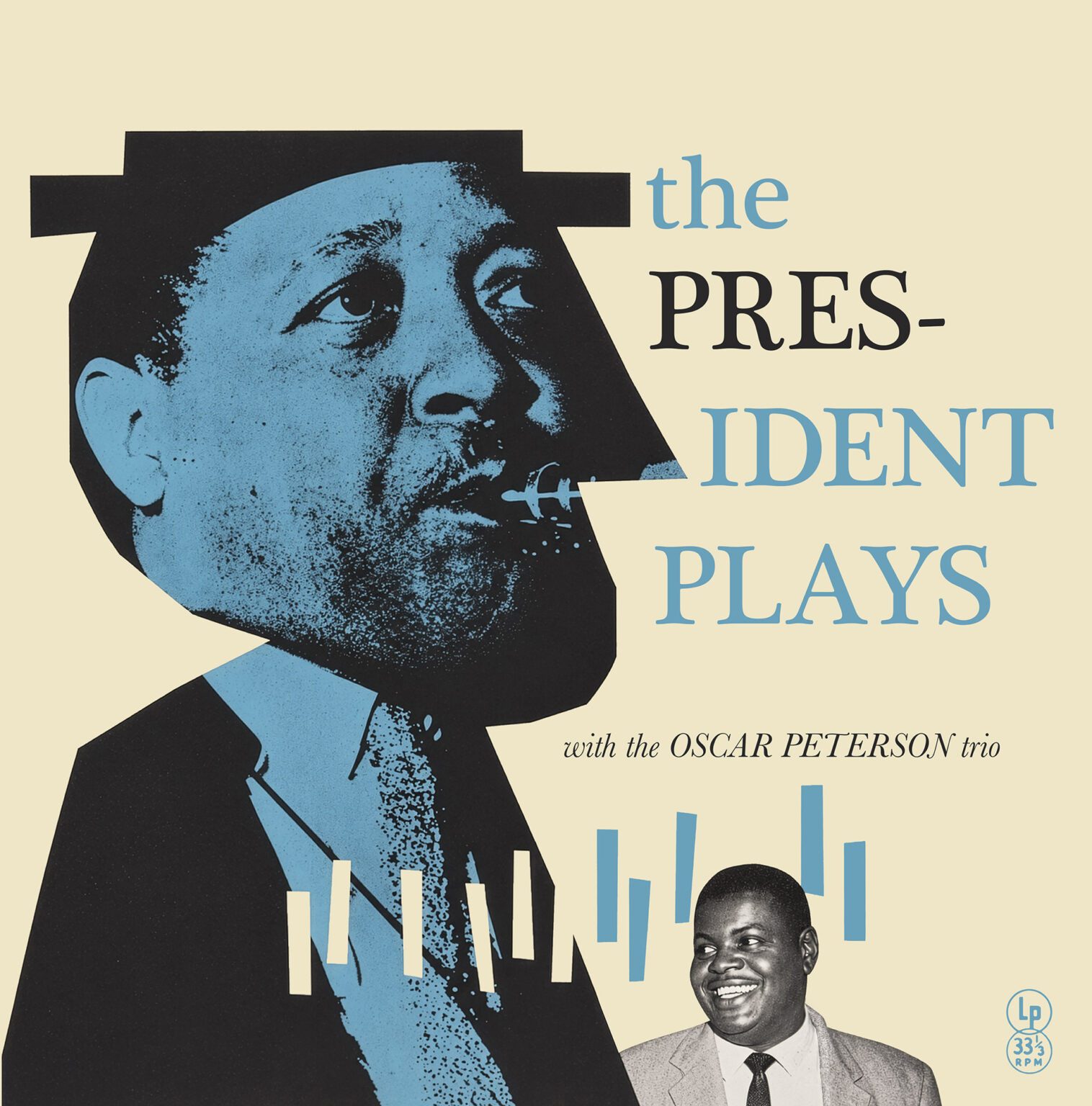
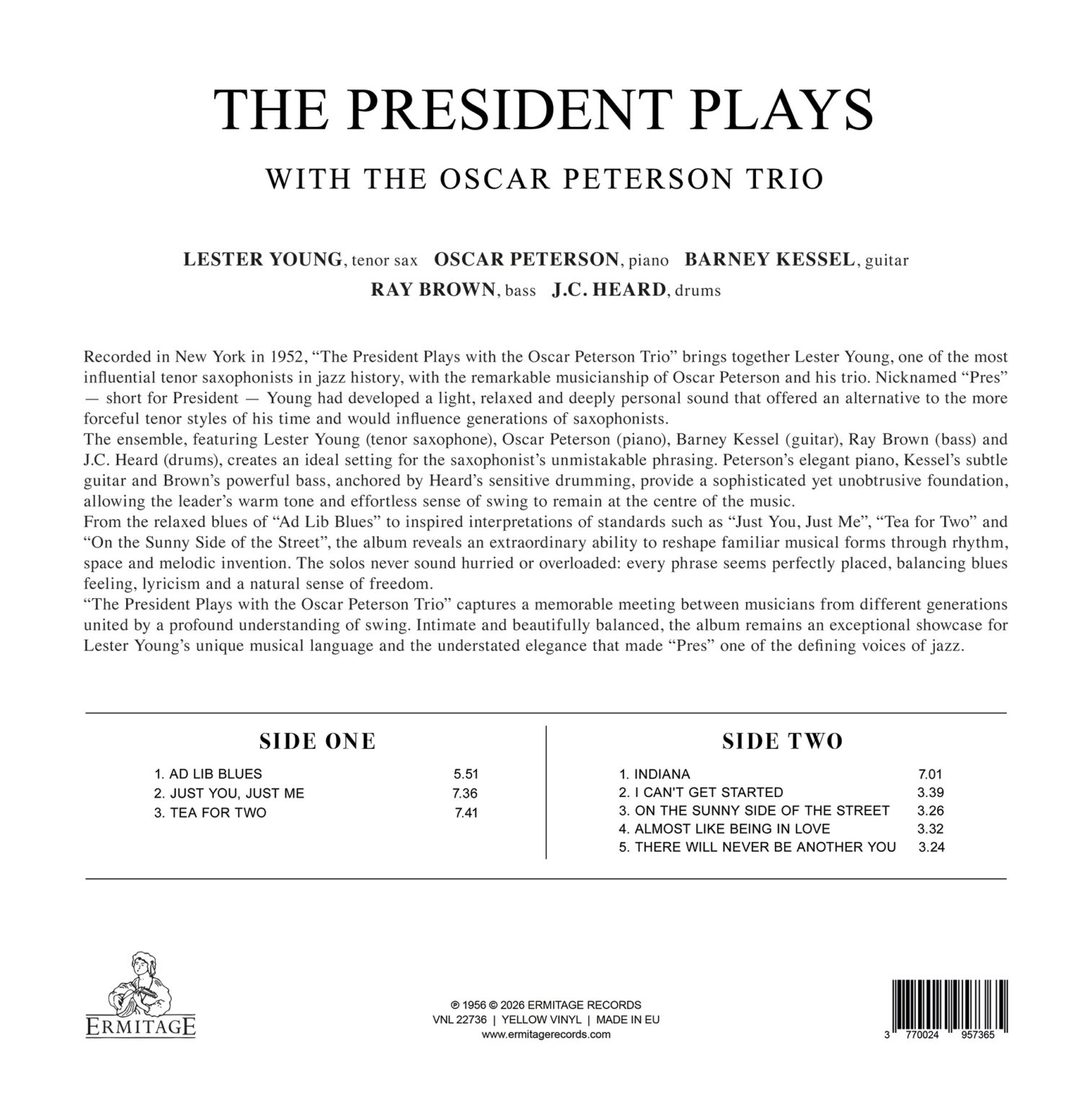
Recorded in New York in 1952, “The President Plays with the Oscar Peterson Trio” brings together two of the most celebrated figures in jazz, Lester Young and Oscar Peterson, in a memorable musical encounter. Affectionately known as “Pres”, Young had transformed the language of the tenor saxophone with his light, flowing tone, melodic imagination and distinctive approach to rhythm. His relaxed phrasing and subtle expressiveness offered an alternative to the more forceful styles of his contemporaries and influenced generations of musicians. The ensemble, featuring Lester Young (tenor saxophone), Oscar Peterson (piano), Barney Kessel (guitar), Ray Brown (bass) and J.C. Heard (drums), combines technical mastery with remarkable sensitivity, creating a setting in which each musician contributes without overshadowing the others. Peterson’s fluid piano lines, Kessel’s tasteful guitar accompaniment and Brown’s assured bass playing blend naturally with Heard’s precise, understated drumming, providing an ideal foundation for the saxophonist’s lyrical improvisations. The album features a selection of jazz standards alongside the blues-based “Ad Lib Blues”, offering a varied portrait of Young’s artistry. Performances of “Just You, Just Me”, “Tea for Two”, “On the Sunny Side of the Street” and “There Will Never Be Another You” demonstrate his ability to approach familiar melodies with freshness and originality. Rather than relying on virtuoso displays, he shapes each solo through subtle rhythmic variations, unexpected melodic turns and a masterful use of space. The result is music of exceptional clarity, warmth and spontaneity, enriched by the intuitive interaction of the entire group. Beyond its exceptional musicianship, “The President Plays with the Oscar Peterson Trio” represents a fascinating dialogue between different generations and approaches to jazz. Young’s refined melodic language finds a natural counterpart in Peterson’s rhythmic vitality and harmonic sophistication, while the ensemble maintains an effortless sense of cohesion throughout. A timeless recording from the early 1950s, the album remains an eloquent testament to the enduring influence of Lester Young and the expressive possibilities of small-group jazz.